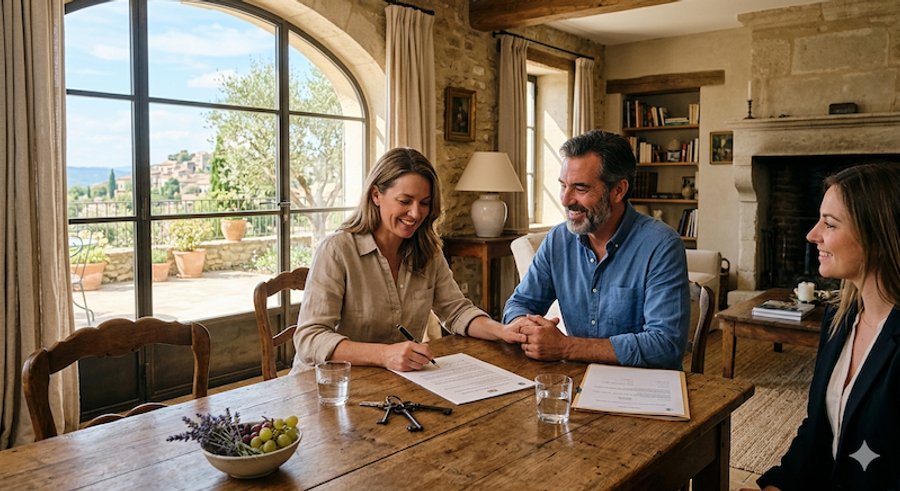

Renting in France is not a straightforward exercise, even for the French. For a foreign applicant who has just arrived, or who is about to, it can feel borderline impossible. The dossier requirements are strict, the competition is real in the cities most internationals target, and the rhythm of the market is unfamiliar. Here is how it actually works, and how to put yourself in the best position to land the right place.
The dossier is everything
In France, the rental application is called the dossier de location, and the landlord (or their agent) almost always decides on the dossier alone. Viewings are short, often shared with other applicants, and the winner is the one whose paperwork is cleanest and most reassuring.
A standard dossier typically includes a copy of your passport or ID, your last three pay slips, your French work contract or a letter of assignment if you are on a corporate transfer, your most recent avis d'imposition (annual French tax statement) if you have one, proof of your current address, and three months of bank statements.
The rule landlords apply almost universally: your gross monthly income must be at least three times the rent. A 2,000 € per month apartment requires roughly 6,000 € per month in declared income, and they will check.
Speaking French changes everything
This is the part nobody tells you, and it matters more than most newcomers expect. Almost every step of the rental process in France happens in French. The listings are in French. The agents answer the phone in French. The landlord at the viewing wants to chat in French. The lease itself is drafted in French and the law that governs it (the loi du 6 juillet 1989) is, of course, written in French.
You can absolutely rent without being fluent, and many of our clients do. But landlords are reassured by tenants they can talk to easily. An applicant who shows up at a viewing and engages even a few warm sentences in French (a quick bonjour, merci de nous recevoir, a polite question about the building, a thank you on the way out) is meaningfully more likely to win the apartment than one who relies entirely on English. In a market where three or four equally solid dossiers land on the same desk, that human connection often decides who gets the keys.
The practical takeaway: invest in at least basic conversational French before you start visiting, or work with someone who handles the French side for you. It is one of the highest-leverage things you can do.
The foreigner challenge: no French history
If you have just arrived, you have no French pay slips, no French tax returns, and no French address yet. Even with a strong international profile and a great job, you can lose to a French applicant with a thinner dossier simply because their paperwork fits the expected template. There are good ways around this.
A guarantor (in French, garant) is someone who agrees to pay the rent if you do not. Traditionally a French family member, in practice for internationals it is usually either a paid service like GarantMe or Visale, or your employer through a company lease or guarantee letter. GarantMe in particular has become the standard solution for foreign applicants and is widely accepted by Paris and Lyon landlords.
A company lease, where your employer signs the lease directly and houses you in it, removes the dossier issue entirely. It is common for senior corporate transfers and is the cleanest setup when available.
A larger deposit or several months paid in advance is sometimes accepted, particularly for furnished rentals, though the law caps what landlords can legally request.
Furnished vs unfurnished
Furnished rentals (meublé) come fully equipped, including a working kitchen with appliances, and have more flexible lease terms (typically one year, or nine months for students). They are the default choice for the first year of an international stay because they remove the move-in equipment problem entirely.
Unfurnished rentals (non meublé) come with a three-year lease, and the definition of "unfurnished" in France is stricter than abroad: the apartment can arrive without a kitchen, without light fixtures, sometimes even without curtain rods. Budget for a meaningful equipment outlay if you go this route.
Expect to pay roughly 10 to 20 percent more per month for a furnished property of equivalent surface, which is often a fair trade for the first year.
The viewing and the offer
Once your dossier is ready, the search itself moves quickly. In central Paris, central Lyon, Bordeaux, or Nice, well-priced apartments are visited within 48 hours of being listed and rented within a week. You need to be reactive: respond to listings the same day, attend viewings in person when possible, and arrive with your dossier already printed or assembled as a single PDF to hand over on the spot.
If you cannot be there physically, a buyer's or tenant's agent can attend on your behalf, film the apartment, and submit your dossier the same hour.
The lease and move-in
The lease itself is called the bail de location and is heavily regulated by French law. The deposit (dépôt de garantie) is capped at one month's rent for unfurnished and two months for furnished. The agency fee, if any, is also capped by law based on the apartment's surface area.
On move-in day, you and the landlord (or agent) walk through the apartment together and sign the état des lieux d'entrée, a detailed inventory of every room's condition. Take this seriously: it is your protection at move-out. Photograph everything, note every mark, and do not feel rushed.
A final word
The French rental market rewards preparation, reactivity, and human contact. The dossier opens the door, the language warms the welcome, and the right guarantor solution closes the deal. None of it is impossible for an international applicant, but doing it alone in a language you do not yet speak is genuinely hard.
At Guava Partners, we work as the dedicated tenant-side advisor for our international clients, handling everything from search to dossier to viewing to lease signature, in both French and English. Stéphanie went through this exact process herself when she arrived from Los Angeles, and we built our practice on what she wished she had had. If you are about to rent in France and want someone in your corner, we would be glad to talk. You can find us at www.guava-partners.com.