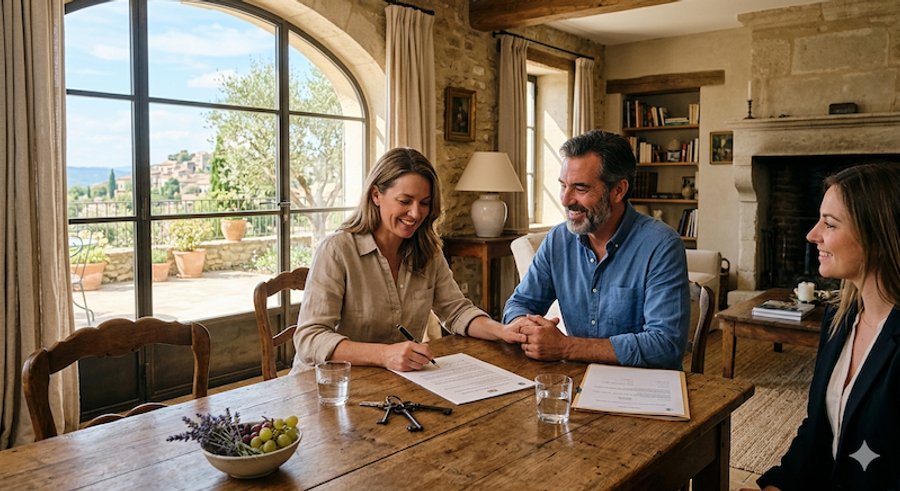
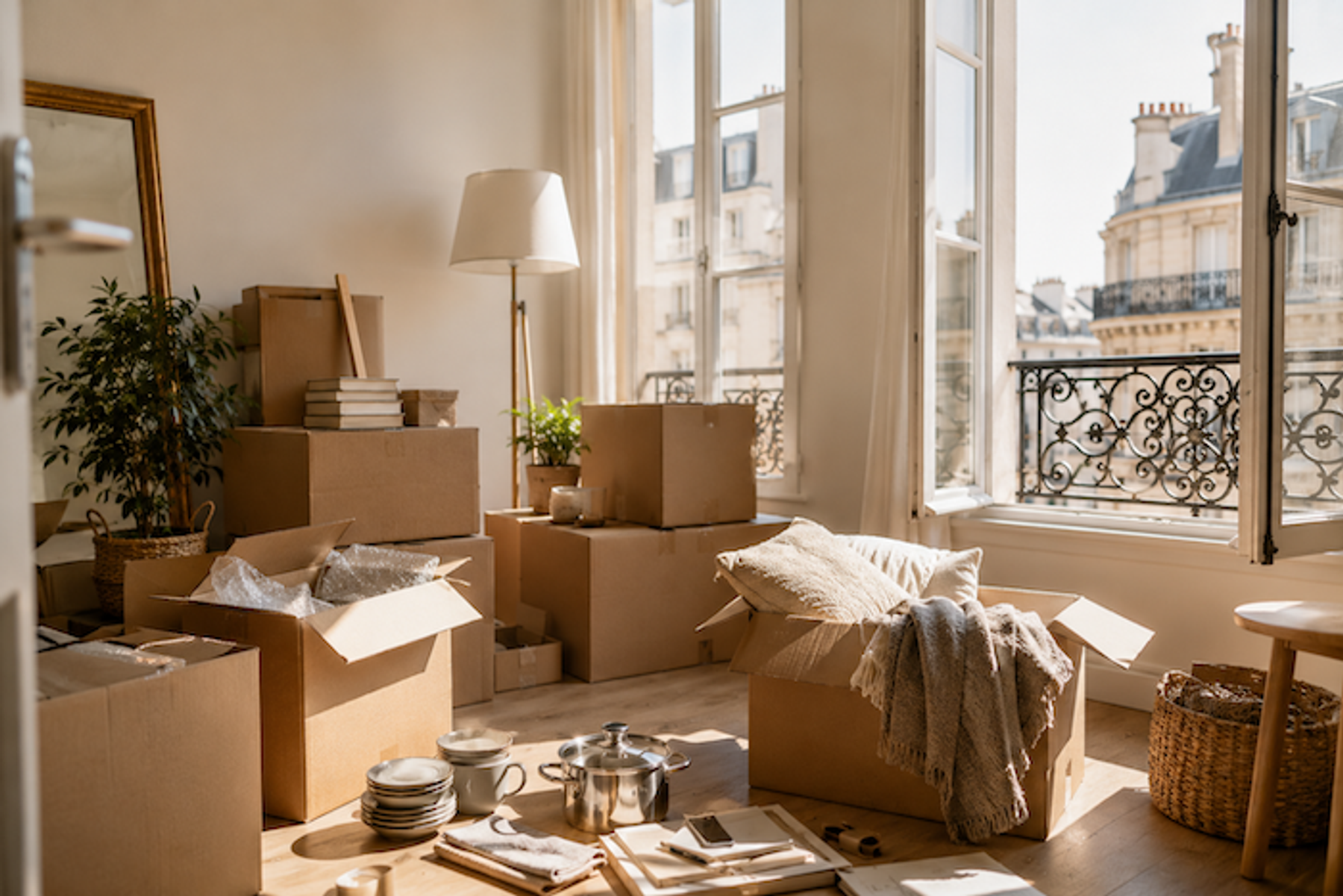
You have the keys. The lease is signed or the acte de vente is behind you. And then you walk into the empty apartment and realize that nobody really prepared you for the next two weeks.Moving into a French home comes with a specific shopping list, some of it obvious, some of it surprisingly French. Here is what you actually need to sort out in the first month, in roughly the order most of our clients tackle it.
Set up utilities before you arrive, if you can
Electricity and gas are the first calls. The historic supplier is EDF for electricity and Engie for gas, but the market is open and you can also choose alternatives like TotalEnergies, Eni, or Octopus Energy, often with cheaper tariffs. You will need your address, the meter number (numéro PDL for electricity, PCE for gas), and a French bank account for direct debit, called prélèvement automatique.
Water is generally not a separate setup in apartments: it is included in the charges de copropriété (building charges) and billed through your syndic. In a house, you will register directly with the local water utility.
Internet and mobile are a competitive market with four main providers: Orange, Free, SFR, and Bouygues. Fiber (la fibre) is widely available in cities and increasingly in smaller towns. Expect to pay around 25 to 45 € per month for a full internet package, often bundled with TV and mobile. Lead time for installation is usually one to three weeks, so book early.
Home insurance is non-negotiable
This one trips up almost every newcomer. In France, home insurance, called assurance habitation, is mandatory for tenants and effectively essential for owners (and required by your syndic in a co-owned building).
Your landlord or notaire will ask for proof, the attestation d'assurance habitation, before handing over keys. Set this up a week before move-in. Major providers include MAIF, MAAF, Matmut, AXA, MACIF, and Direct Assurance. Online quotes take ten minutes. Budget 150 to 350 € per year for a standard apartment, more for a house or higher-value contents.
A useful detail: ask for a contrat multirisques habitation, which covers fire, water damage, theft, and third-party liability in one policy. The civil liability part, responsabilité civile, also covers your family in daily life and is often required separately when enrolling children in school.
The French rental quirk: an unfurnished apartment is genuinely empty
If you are renting unfurnished (non meublé), prepare for a stricter definition than you may be used to. An unfurnished French apartment typically comes with: walls, floors, windows, a bathroom, sometimes a kitchen sink, and very often no kitchen at all. No fridge, no oven, no cooktop, no cabinets in some cases. Light fixtures are sometimes missing too, with just wires hanging from the ceiling.
This is normal. It is also why furnished rentals (meublé) command a 10 to 20 percent premium and why many new arrivals choose them for the first year.
If you are setting up an unfurnished place, your first IKEA, Darty, or Boulanger run will be significant. Plan for a fridge, an oven or combined cooktop, a washing machine (clothes dryers are far less common in France than in North America), basic light fixtures, and curtains or shades. Many Parisian apartments have persiennes or volets (exterior shutters) that handle privacy, but interior light control is on you.
The small purchases nobody warns you about
A few specific items that catch almost everyone off guard. A French electrical adapter set if you are coming from outside continental Europe. France uses Type E sockets (230V), and adapters for North American, UK, or Swiss devices are easier to buy before you arrive than to track down in a French quincaillerie (hardware store) on day one.
A French SIM card or eSIM, because many French services (deliveries, building intercoms, bank verifications) send SMS only to French numbers. Free Mobile offers plans from 2 € per month for light users.
A basic toolkit, because almost any French apartment will require you to mount something, adjust a volet, or change a robinet (tap washer) in the first month.
Hangers, curtain rods, and shower curtain rails, none of which come with the property.
A vacuum, ideally cordless. French apartments tend to have tile or hardwood floors that show every speck.
A good kettle and a French press or moka pot, because most French kitchens do not come with a drip coffee maker, and rebuilding your morning ritual matters more than people admit.
A note on furniture and delivery
France has excellent furniture options across price points: IKEA for basics, Maisons du Monde and La Redoute Intérieurs for mid-range, Roche Bobois and Caravane for higher-end, plus a thriving second-hand market on Le Bon Coin and Selency for character pieces.
One warning: delivery in French cities can be slow, often two to six weeks, and apartments without elevators come with hidden costs. Many delivery services charge extra for upper floors, and some refuse to bring large items up at all. Ask before you order, and budget for manutention (handling) fees.
A final word
The first month in a French home is administrative. The second is logistical. By the third, you start to actually enjoy the place. The trick is to front-load the boring tasks (insurance, utilities, basic equipment) so the rest of the year is yours.
At Guava Partners, we help international clients well past the signature, with introductions to insurers, utility providers, and the trades worth knowing locally. Stéphanie went through this herself when she arrived from Los Angeles, and we built our service to spare our clients the small frustrations that add up. If you are moving to France and would like a partner on the ground, we would be glad to talk. You can find us at www.guava-partners.com.